

Website Design for Personal Injury Law Firms
Custom websites for personal injury firms, designed for fast mobile use, clear case-type pathways, credible proof, and straightforward contact.
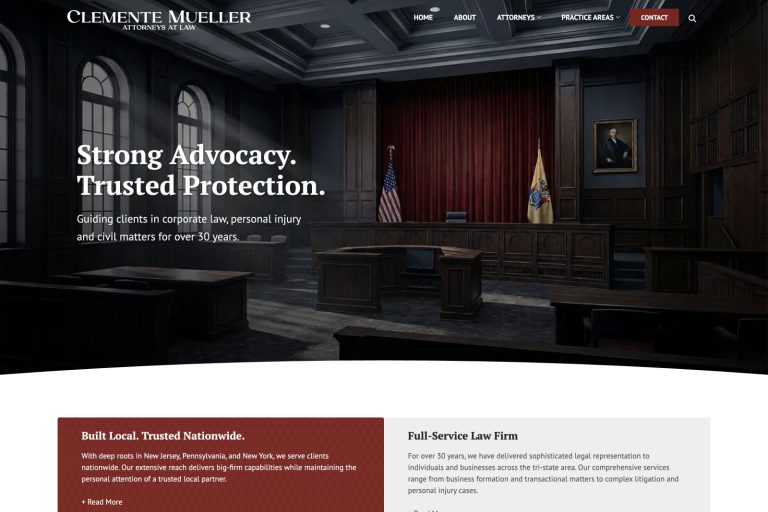
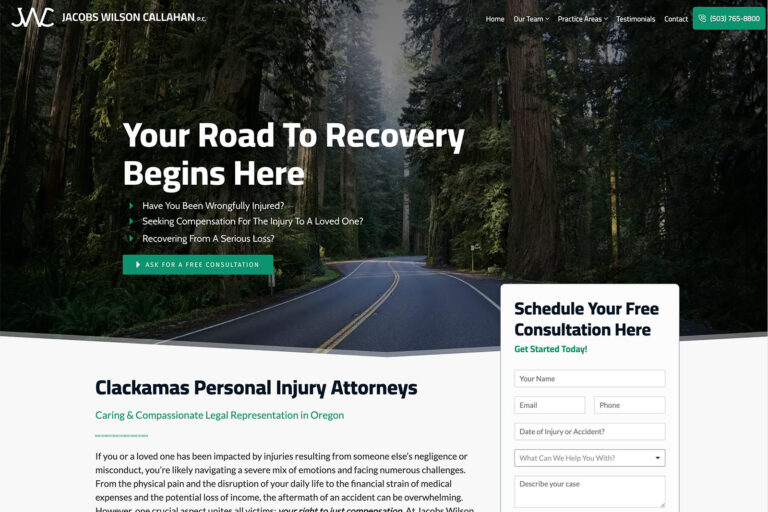
Selected personal injury law firm websites

Dan Gilroy has been instrumental in establishing our new website and helping us cultivate an effective web presence for our business. His customer service, experience, responsiveness to requests, willingness to share his expertise, and quick turn around time all make it easy for me to recommend his services to anyone who is looking for a professional web site.
Read more client reviews
Design priorities for a personal injury law firm website
A personal injury firm’s website is often an early point of contact for someone dealing with an accident, loss, or uncertainty. Dan Gilroy Design creates custom law firm websites that make the firm’s case types, attorneys, proof, and contact options easy to understand.
Visitors need useful information and a credible sense of the firm. A slow, dated, or generic site can make that evaluation harder. We design so people can identify the matters the firm handles, understand why its experience is relevant, and reach the firm without unnecessary friction.
How personal injury websites support evaluation and contact
Empathy and clarity
People visiting a personal injury website may be overwhelmed or uncertain. Clear language, calm hierarchy, and useful wayfinding help them find the information they need without relying on exaggerated promises or pressure.
Mobile-first development
Every site is designed and tested across screen sizes, with readable type, accessible controls, responsive layouts, and careful attention to loading performance.
On-page and technical SEO
Each build includes a sound search foundation: clear information architecture, titles and descriptions, structured data, internal linking, indexing readiness, and location or case-type structure where appropriate. Ongoing off-page campaigns are separate specialist work, and rankings are never guaranteed.
Clear intake paths
Phone links, forms, and action prompts are placed around the firm’s actual intake process. Analytics and call tracking can help the firm evaluate what happens after launch, but the website does not promise a particular volume or quality of inquiries.
Custom design that reflects the firm’s strengths
Whether the practice is a focused solo office or a large litigation firm, its website should reflect its own character, experience, audience, and approach. The design is built from the firm’s positioning rather than a personal injury template.
Useful features for personal injury firms
- Substantive attorney bios that present the people and experience behind the practice.
- Well-structured case-type pages that explain the work and make related proof easy to find.
- Clear calls to action written and placed to match the firm’s consultation and intake model.
- Mobile-friendly contact forms that are readable, usable, and proportionate to the information the firm needs.
- Client testimonials and results placed where they add context and presented within applicable advertising rules.
How a personal injury website project works
Every project follows a structured process from scope and content planning through a coded initial website, review, testing, and launch.
See the full website design process and timeline
Does your current site make the firm easy to understand and contact?
Request a QuoteFrequently asked questions
How do the design needs of personal injury websites differ from other practice areas?
Personal injury sites often need especially direct case-type navigation, visible contact options, careful use of testimonials and results, and language that is useful to someone dealing with an injury or loss. The design still has to fit the individual firm. Visual impact should support credibility and comprehension rather than imitate a standard personal injury formula.
What unique challenges come with designing personal injury websites?
The central challenge is presenting authority and empathy without pressure or overstatement. That calls for professional visuals, clear messaging, readable type, usable navigation, real proof, and accessibility-minded design and testing. Disclaimers, privacy language, results, and advertising claims must be supplied or approved by the firm and reviewed by its counsel where appropriate.
How do color, typography, and layout affect trust on a PI website?
They shape whether the site feels clear, current, and credible. Type must remain readable under stress, layouts should make the case types and contact options easy to find, and color should fit the firm’s positioning while maintaining sufficient contrast. Reviews and results can add useful proof when they are accurate, attributed, and presented within applicable advertising rules.
What role does SEO play in personal injury web design?
Website design supplies the on-page and technical foundation: clear structure, fast pages, responsive development, useful headings, internal links, metadata, and structured data. Location and case-type pages can clarify relevance when the content supports them. These elements help search engines understand the site, but they do not guarantee rankings. Ongoing link building, off-page SEO, Google Business Profile work, and paid campaigns are separate specialist services.
How do you pack detailed legal information in without overwhelming visitors?
We use clear headings, concise introductions, related-page links, and a hierarchy that puts the firm’s case types, relevant proof, attorney experience, and contact options first. Detailed legal material can live on dedicated pages and in FAQs, giving interested readers depth without forcing every visitor through one long block of text.
Start with a quote.
Share the essentials about your firm, where the project stands, and what the website needs to accomplish. Dan Gilroy Design will respond with a clear recommendation on scope, schedule, and likely cost.