

Small Firms & Solo Attorneys
Custom websites that help smaller firms look established and distinct without presenting them as larger than they are.
Explore small law firm website designDan Gilroy Design builds custom WordPress websites for law firms. We plan the site's structure and content, then design and build it with organic search and AI visibility in mind. We migrate the content, manage the launch, and support the site after it goes live.


Dan Gilroy did an incredible job designing the new Hicks Thomas website. His customer service was outstanding -- responsive, thoughtful, and always willing to go the extra mile. What impressed me most was his efficiency, quickly ensuring a smooth process from start to finish…
Read more client reviews
An insurance defense firm needs to speak to claims professionals. A plaintiff-side practice needs to reassure injured people and their families. A mediator needs to establish neutrality. Those differences shape the sitemap, writing, proof, and design.
Before work begins, the proposal identifies the pages, content responsibilities, design and development work, migration, testing, and launch plan. It also identifies what your firm will provide and where a specialist will contribute.
We build each site as a custom WordPress theme without a page builder. Your team reviews the first design as a working, password-protected website. We then refine the site, complete the content, and test it across devices before launch.
Law firm websites must account for advertising rules that vary by state, disclaimer and no-attorney-client-relationship language, and careful use of results and testimonials.
The Florida law firm website design page shows how state-specific rules and regional positioning affect the work.
Before founding Dan Gilroy Design, Dan Gilroy spent sixteen years in Washington law and policy, including three with the U.S. Senate Committee on Finance and thirteen inside White & Case and Patton Boggs. He is a policy professional rather than an attorney. That experience is useful when the work turns to practice descriptions, attorney credentials, disclaimers, results, testimonials, and internal review. The full background is on the About page.
A prospective client needs to know whether your firm handles the problem, whether it can show relevant experience, and what to do next. The design, navigation, proof, and contact path should make those answers easy to find. The pricing page explains how the required work becomes a project scope and quote.
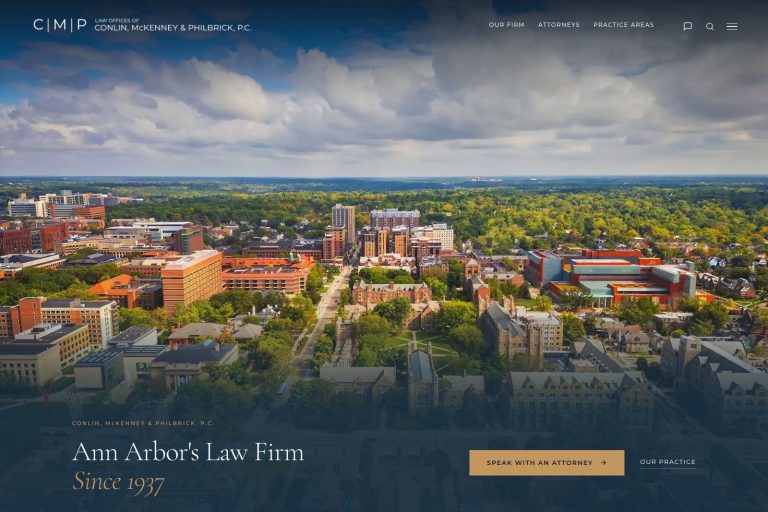
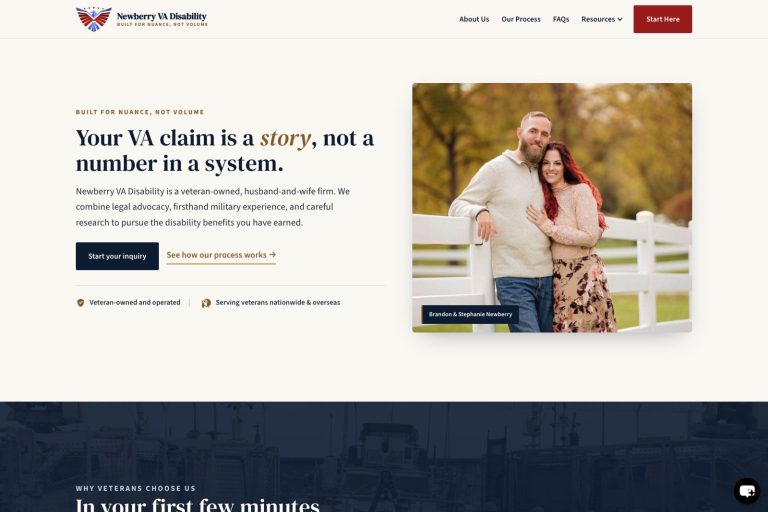
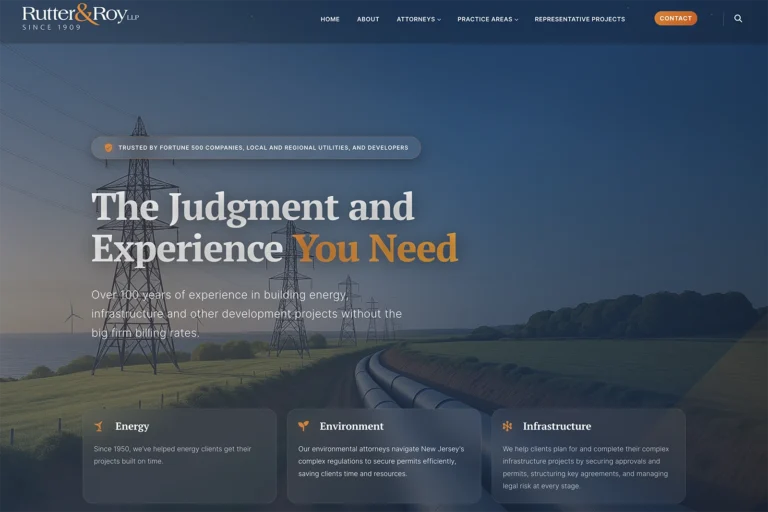
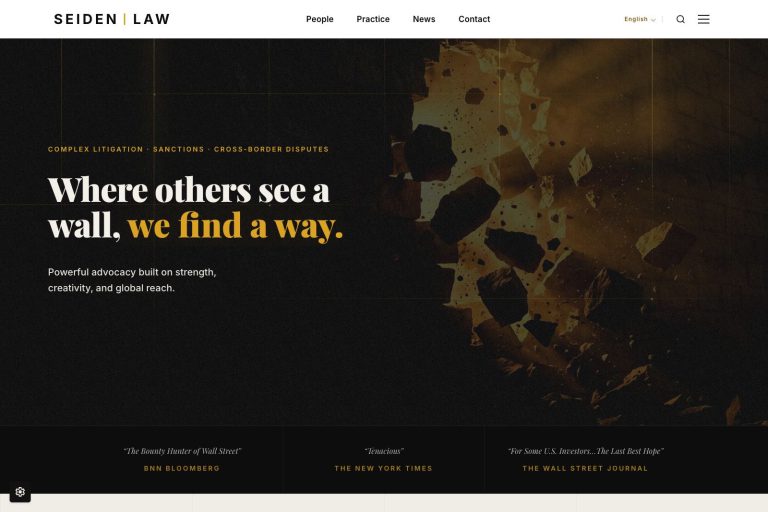
The examples below are live client sites. The reviews page collects attributed client feedback, and the comparison of the best law firm website design companies explains how leading providers differ by buyer fit. The website design specialties directory organizes related pages by firm size, practice area, and region.
Services
Website design is the main engagement. On-page SEO is part of every build. Content writing and identity work are added when needed, and the proposal identifies who handles each part.
Most clients fall into one of three groups.
Custom websites that help smaller firms look established and distinct without presenting them as larger than they are.
Explore small law firm website designFirms with ten to fifty-plus attorneys usually need deeper sitemaps, organized practice sections, consistent biographies, and a visual system that can carry more content.
Explore mid-sized law firm website designRetired judges and senior trial attorneys building a neutral practice need quiet credibility and an easy path to the calendar, not litigation marketing.
Explore website design for mediatorsThe exact scope varies. Every website project includes the following work.
One custom homepage and the interior templates defined in the proposal. The first presentation is a working, password-protected website.
Custom WordPress development without a page builder. Staff can update pages through standard editing screens, and the firm owns the finished site.
We load the approved content, edit client-supplied copy, and identify any new writing in the proposal.
Page titles, meta descriptions, heading structure, schema, XML sitemaps, and clean URLs are included in every build.
We optimize images, keep the code lean, configure caching, and test Core Web Vitals before launch.
We test every template across common phone, tablet, laptop, and desktop sizes before launch.
We map changed and retired URLs to the most relevant new pages before launch.
We remain available after launch for fixes and questions. Later changes can be quoted when needed.
The written proposal sets the schedule, responsibilities, and approval process.
We meet on Zoom to discuss the firm, audience, goals, content, and required features. The written proposal follows.
After the agreement, first payment, and questionnaire, we confirm the sitemap, content responsibilities, and design brief. Logo work comes first when included.
We design and code the initial website as a working, password-protected site. When content writing is included, the new copy appears in that first design so your firm can review the words and design together.
Your team reviews the site on desktop and mobile devices, then sends feedback and requested changes. We make the agreed revisions, complete testing, and launch after final approval and the remaining balance is paid.
See the full process and timeline
Want to know what this would look like for your firm?
Request a Quote →Case study
Dan Gilroy Design launched the Schuck Law redesign on September 20, 2025. The project reorganized a dense legacy site around Oregon, Washington, and federal employment-law paths, then connected those routes to a visible consultation form.
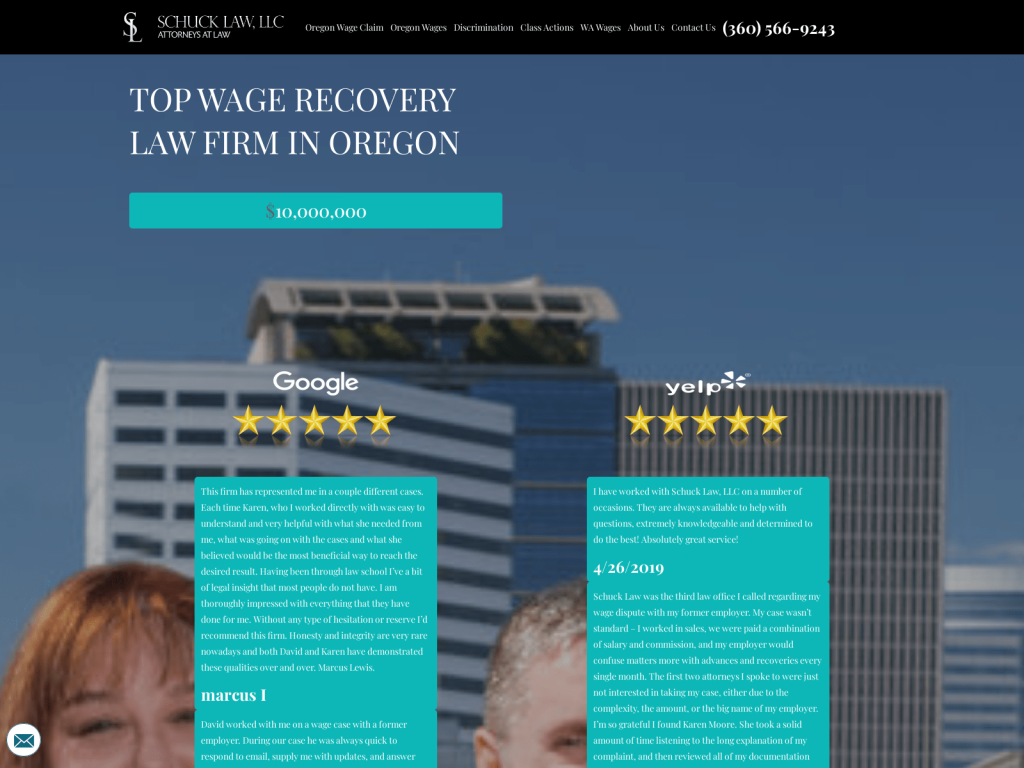

The earlier site used a dense, desktop-era navigation and placed a large volume of wage-law material, review content, and a headline recovery figure into one opening experience. Visitors had to scan many equal-weight choices before finding the route that applied to them.
The firm serves workers in two states across many wage and employment issues. The redesign had to make that breadth easier to navigate while preserving detailed legal information and a prominent consultation path.
Organize the site around Oregon, Washington, and federal routes; use the attorneys and real firm imagery as primary trust signals; and keep the consultation form visible without displacing the legal content.
Information Architecture, Website Redesign, Responsive Design, WordPress Development, Content Migration, Contact Form Integration, Launch Support.
Verified evidence
Very happy working with Dan to create our office website. He was responsive and communicated well.
Complete custom firm websites commonly cost $8,000–$16,000. Focused multi-page websites generally fall between $6,000 and $8,000, while larger or more complex projects may reach $20,000 or more. These are planning ranges, not packages. The pricing page explains the scope factors, and your written proposal sets the exact work and price.
The written proposal sets the target schedule after the page count, content responsibility, optional logo or writing work, functionality, and approval path are known. Work begins after the agreement, first payment, completed questionnaire, and required starting materials are in place. The process page explains the full sequence.
Yes. Since 2004, Dan Gilroy Design has built more than 300 websites for law firms, mediators, and arbitrators, and nothing else. That focus means the conventions, ethics rules, and buyer psychology of legal websites are already built into the work.
Yes. You can update attorney bios, practice pages, news, and other content in WordPress. If you prefer to send changes to us, Dan Gilroy Design can handle routine edits for you. We provide training and explain the available support and costs, so your firm can choose how much to manage internally.
Dan Gilroy leads strategy, design direction, and client communication. Longtime collaborators handle development, search, or identity work when the proposal calls for it. The proposal names each person’s role before work begins.
Yes. We review the existing website, identify useful content and URLs to preserve, and plan the new structure around your firm’s needs. When a URL changes, we map it to the most relevant replacement and test the redirect before launch. Your firm reviews and approves the new website before it goes live.
Sites launch on secure managed WordPress hosting with daily backups and automatic updates, and we stay available for support after launch. If your firm already has hosting it is happy with, we can usually work with it; if not, setup is part of the project.
Share the essentials about your firm, where the project stands, and what the website needs to accomplish. Dan Gilroy Design will respond with a clear recommendation on scope, schedule, and likely cost.