

Mediation Website Design
Websites for mediators, arbitrators, and retired judges building a private ADR practice. Quiet credibility and a clear path to your calendar, not litigation marketing.
Selected mediation and arbitration websites

Bend Mediation
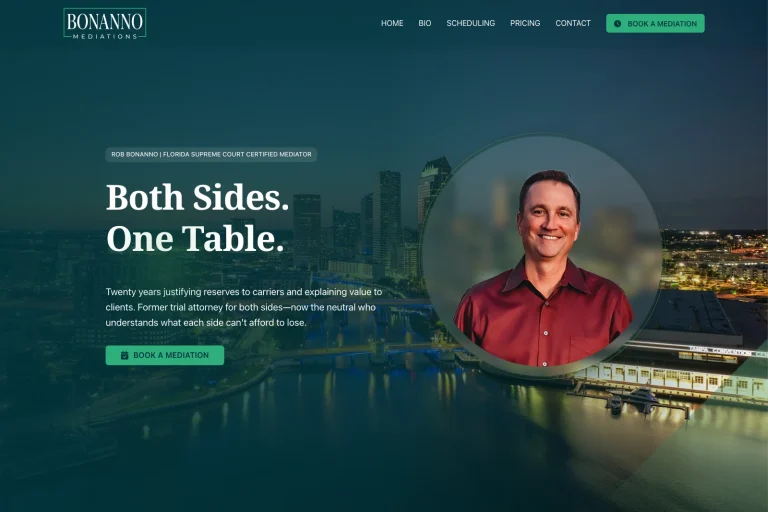
Bonanno Mediations
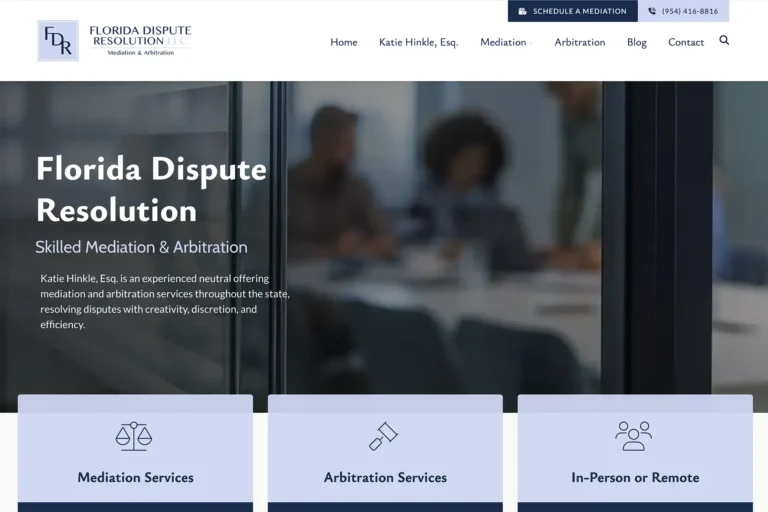
Florida Dispute Resolution
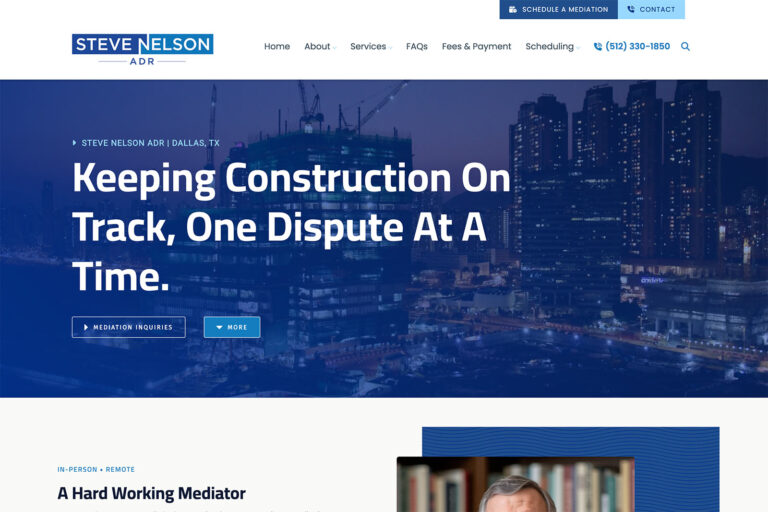
Steve Nelson ADR
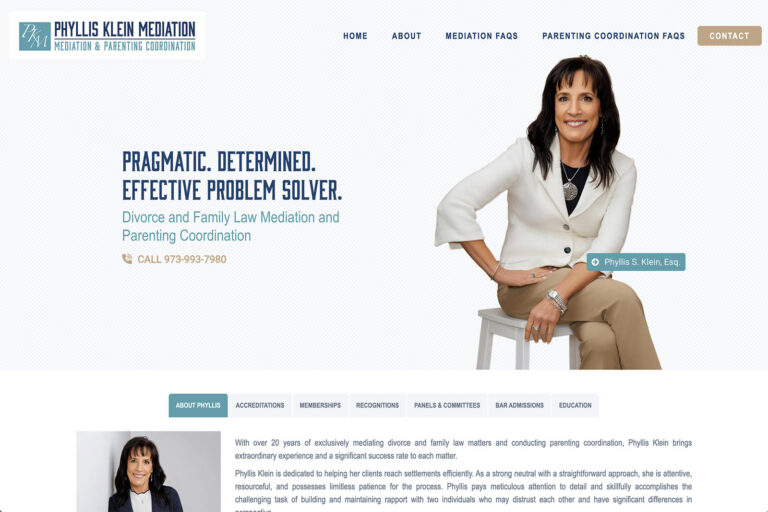
Phyllis Klein Mediation

Lynch Mediation
Dan developed a superb website for my practice as an independent arbitrator. He listens carefully and works hard to implement the client's vision and craft a design that serves its needs. He's very responsive and turns around drafts quickly…
Read more client reviews
What a mediation website needs to establish
If you are a mediator, or a judge or trial attorney about to become one, your website is where your reputation becomes findable. Even with years on the bench and the name recognition that comes with it, a site that reinforces your credentials gives you a real advantage in what can be a crowded ADR market. We have helped several retired judges make the move from the bench into private mediation, and seasoned trial attorneys establish themselves as neutrals, and the website is a central part of that transition every time.
The tone matters more here than in most legal website work. A mediation site has to read as neutral: composed, credential-forward, and free of the aggressive marketing language of a plaintiff’s firm, because counsel on both sides of a dispute have to look at it and trust what they see. That is a design problem as much as a writing problem, and it is the one we solve first on every mediation project.
What should a mediation website include?
Four things do most of the work: a credential-led home page, scheduling information that is prominent on every page, a clear presentation of the matters you mediate, and a contact page with unambiguous instructions for scheduling inquiries. Attorney testimonials help more than most mediators expect, and more than most are initially comfortable with.
Lead with the credentials. The home page should put your experience and qualifications to work immediately: the bench years, the trial career, the panels, the specialties. If you mediate within a niche, say so plainly, because a mediator known for construction defect or employment matters is easier to choose than a generalist. A strong photograph and a serious tone do more here than any slogan.
Make scheduling effortless. A large share of your visitors are counsel who have already decided to consider you and simply need to know how to book. Some mediators publish a phone number, an email, and instructions; others want a form with fields for the parties, counsel, preferred dates, and half-day or full-day sessions. If your practice is affiliated with a provider such as ADR Services, the site should say clearly who handles your calendar and how to reach them. However you run it, the path to a booked session should never take detective work.
Let others make your case. Mediators are often reluctant to ask for testimonials or attorney endorsements. They should not be. Endorsements from counsel who have sat in your sessions are the strongest proof a neutral can offer, and if your site does not carry them, a competitor’s does.
A focused scope for an individual mediation practice
Mediation websites are usually smaller in scope than a small law firm site, and dramatically smaller than a mid-sized firm build. Some neutrals are best served by a focused site of a half-dozen pages; others have run happily for years on a single strong page, which is where our landing page work overlaps this practice. We will tell you honestly which your situation calls for.
Small scope does not mean template. Every mediation site is custom designed for the neutral it serves. The written proposal sets the schedule after the content, identity, photography, scheduling requirements, and review responsibilities are clear. Pricing is scoped per project, so a focused mediation site is quoted as exactly that.
How a mediation website project works
A mediation site may be focused, but its schedule still depends on content, identity, scheduling requirements, and review responsibilities.
Conversation and proposal
A Zoom call covers the neutral’s credentials, audience, services, scheduling path, content, and visual direction. The studio then prepares the written proposal.
Questionnaire and identity
After the agreement and first payment, the questionnaire, biography or CV, photography, scheduling details, and brand files establish the working brief.
Coded initial website
The first presentation is a fully coded, password-protected website with the credentials, services, scheduling information, and content shown in context.
Refinement and launch
The neutral reviews the working site, agreed changes and content are completed, and final QA follows. The remaining balance is due before launch.
See the full process and timeline
Building a mediation practice? Let's talk about the site.
Request a Quote →Included in every mediation website
Sized for a solo neutral, built with the same discipline as a firm site.
A composed, neutral visual style
Composed and credential-forward, designed so counsel on both sides of a dispute read it the same way: trustworthy.
A scheduling path built in
Clear instructions, a booking form with the fields counsel actually need, or a self-scheduling embed. Whatever fits how you run your calendar.
Credentials and matters organized for quick review
Bench history, panels, specialties, and representative matters organized so a visiting attorney finds what they need in seconds.
SEO foundation built in
Clean structure and metadata so you are findable for the searches that matter, like your name and your city plus mediator.
WordPress you can edit yourself
Update your availability, add a presentation, or refresh your bio through plain WordPress screens. No developer required.
Post-launch support
We stay available after launch for changes and questions, the same as we do for every firm we work with.
Frequently asked questions
Do you work with retired judges starting a mediation practice?
Yes, it is a specialty of ours. We have helped several retired judges move from the bench into private mediation, and seasoned trial attorneys establish neutral practices. The website’s job in that transition is to convert a courtroom reputation into a findable, bookable practice, and we know that playbook well.
Can the website handle mediation scheduling?
Yes, in whatever form fits your practice: prominent instructions with a phone number and email, a booking inquiry form with fields for parties, counsel, dates, and session length, or an embedded self-scheduling tool. If a provider or case manager runs your calendar, the site directs counsel there clearly.
What does a mediation website cost?
Less than a law firm website of similar polish, because the scope is smaller and we quote scope honestly. Every project gets an individual written quote based on what your practice needs; there are no packages. Our pricing page explains exactly how the number comes together.
How long does a mediation website take?
A mediation website is not assigned a standard time range. The schedule depends on identity work, biography and service content, photography, scheduling requirements, and review availability. The written proposal sets the target, and the process page explains the full sequence.
Start with a quote.
Share the essentials about your firm, where the project stands, and what the website needs to accomplish. Dan Gilroy Design will respond with a clear recommendation on scope, schedule, and likely cost.