

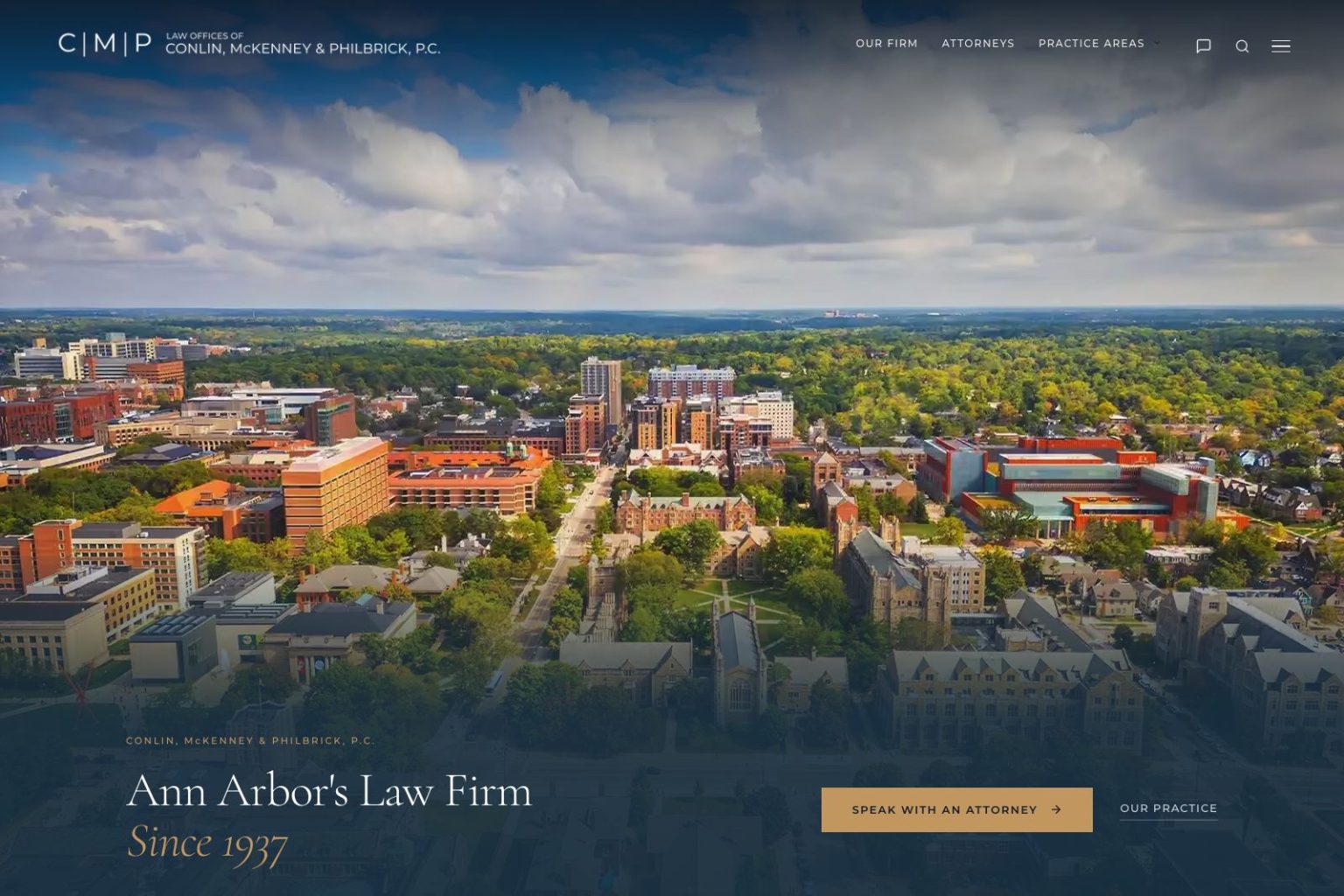
About the firm
Conlin, McKenney & Philbrick, P.C. is an Ann Arbor law firm with roots dating to 1937. Its attorneys serve individuals, businesses, and institutions across Southeast Michigan, with practices spanning business law, litigation, family law, employment, estate planning, insurance defense, municipal law, and real estate.
The website introduces the firm through its connection to Ann Arbor and its range of legal services. Practice-area pages, attorney profiles, and the firm’s history give visitors several ways to understand the team and find relevant help.
What we delivered
- Discovery & Strategy
- Logo Design
- Content Strategy
- Information Architecture
- UX Strategy
- Website Design
- Website Redesign
- Responsive Design
- WordPress Development
- Custom WordPress Theme
- Content Migration
- Copywriting
- Content Editing
- Image Direction & Creation
- Accessibility Review
- On-Page SEO
- Technical SEO
- AI Visibility Strategy
- Analytics & Tracking
- Performance Optimization
- Launch Support
- Hosting & Maintenance
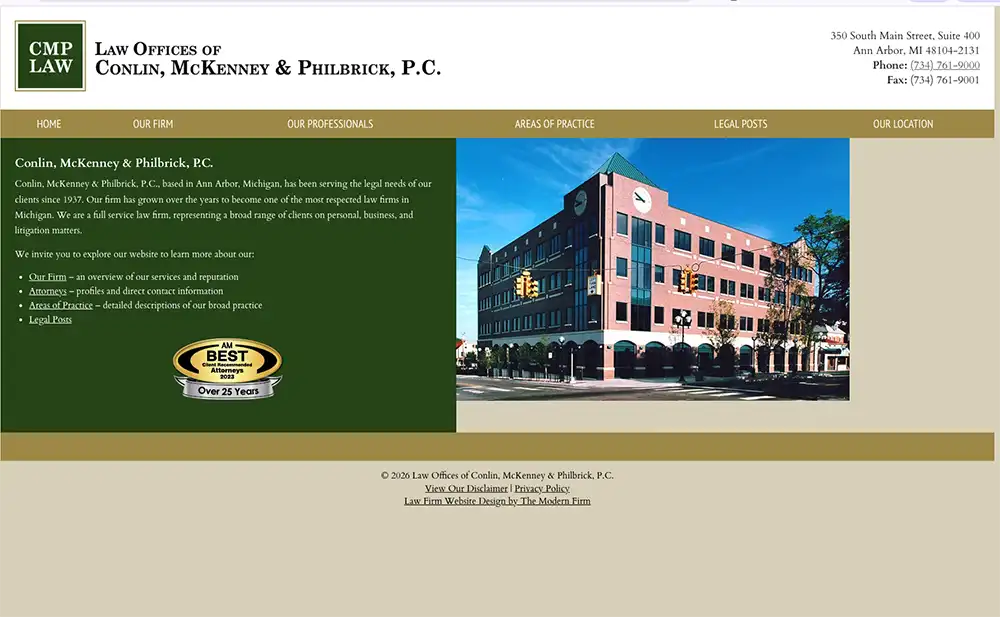
Before
A compact, text-heavy introduction
The previous homepage introduced the firm through a compact block of small text, a list of links, and an office photograph. Its history and broad practice were present, but the dense layout gave visitors little visual guidance and left the firm’s connection to Ann Arbor understated.
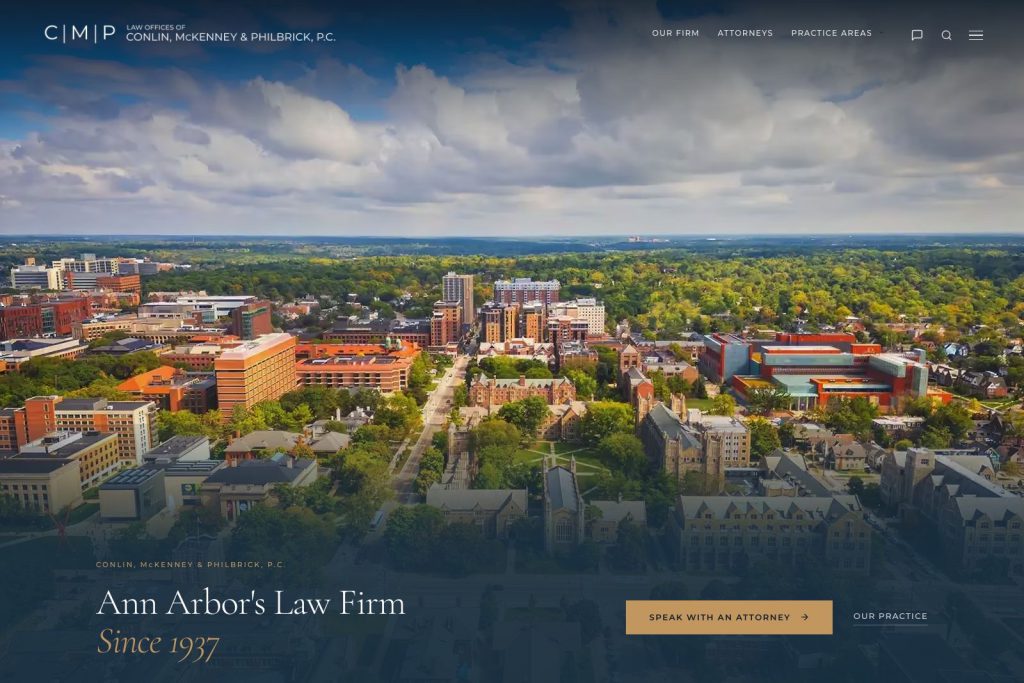
After
A stronger Ann Arbor identity
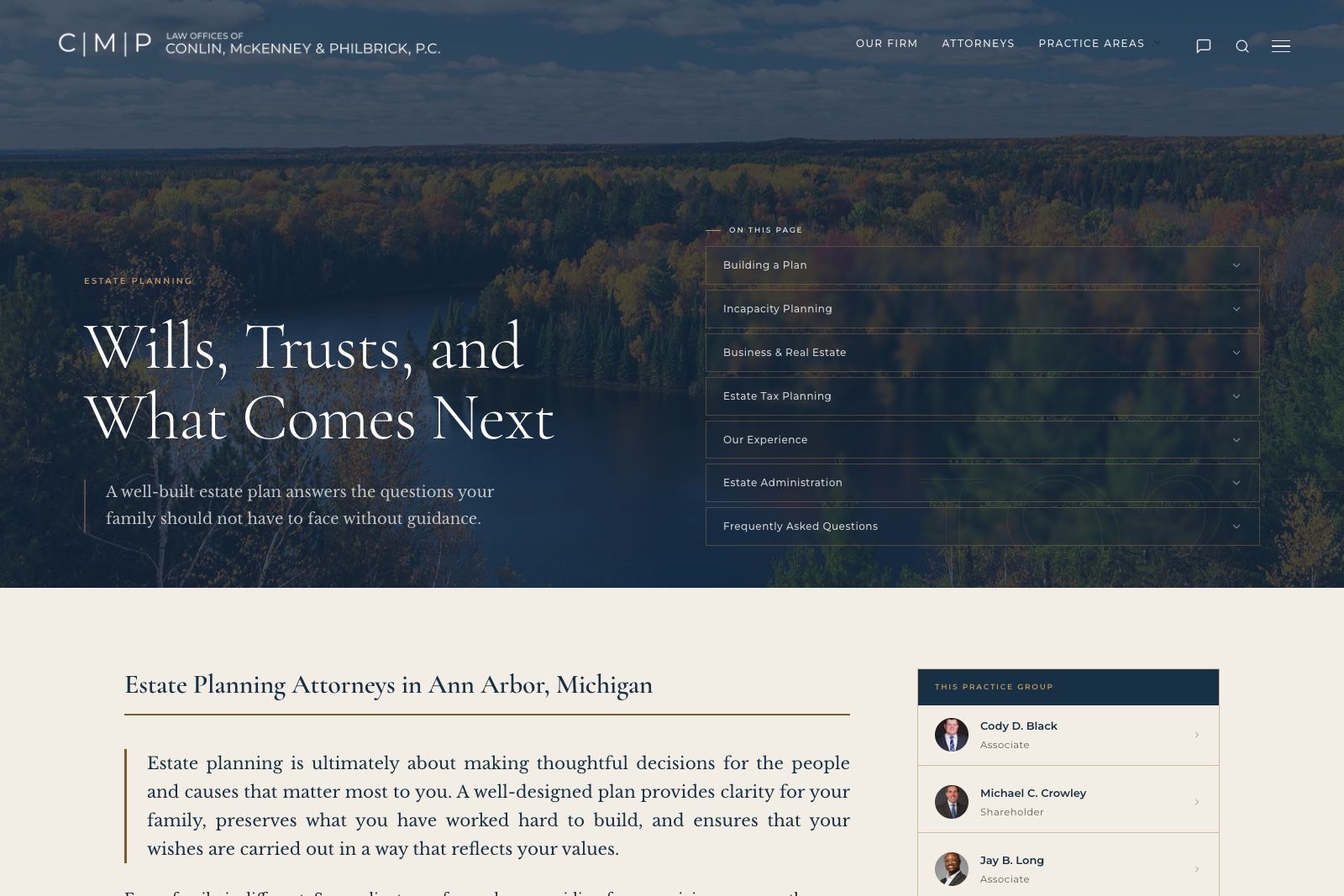
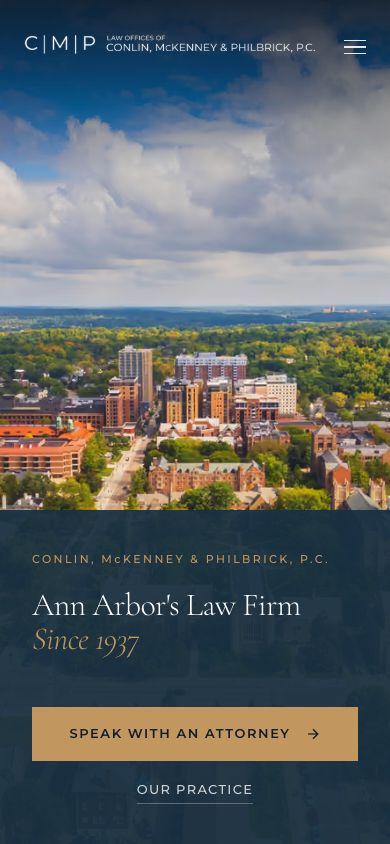
The redesigned homepage leads with a panoramic view of Ann Arbor and a clear statement of the firm’s roots: “Ann Arbor’s Law Firm Since 1937.” Larger typography, more space, and prominent links to the practice areas and an attorney conversation make the next steps easier to identify. The new presentation gives the firm’s longstanding local presence a stronger visual identity.
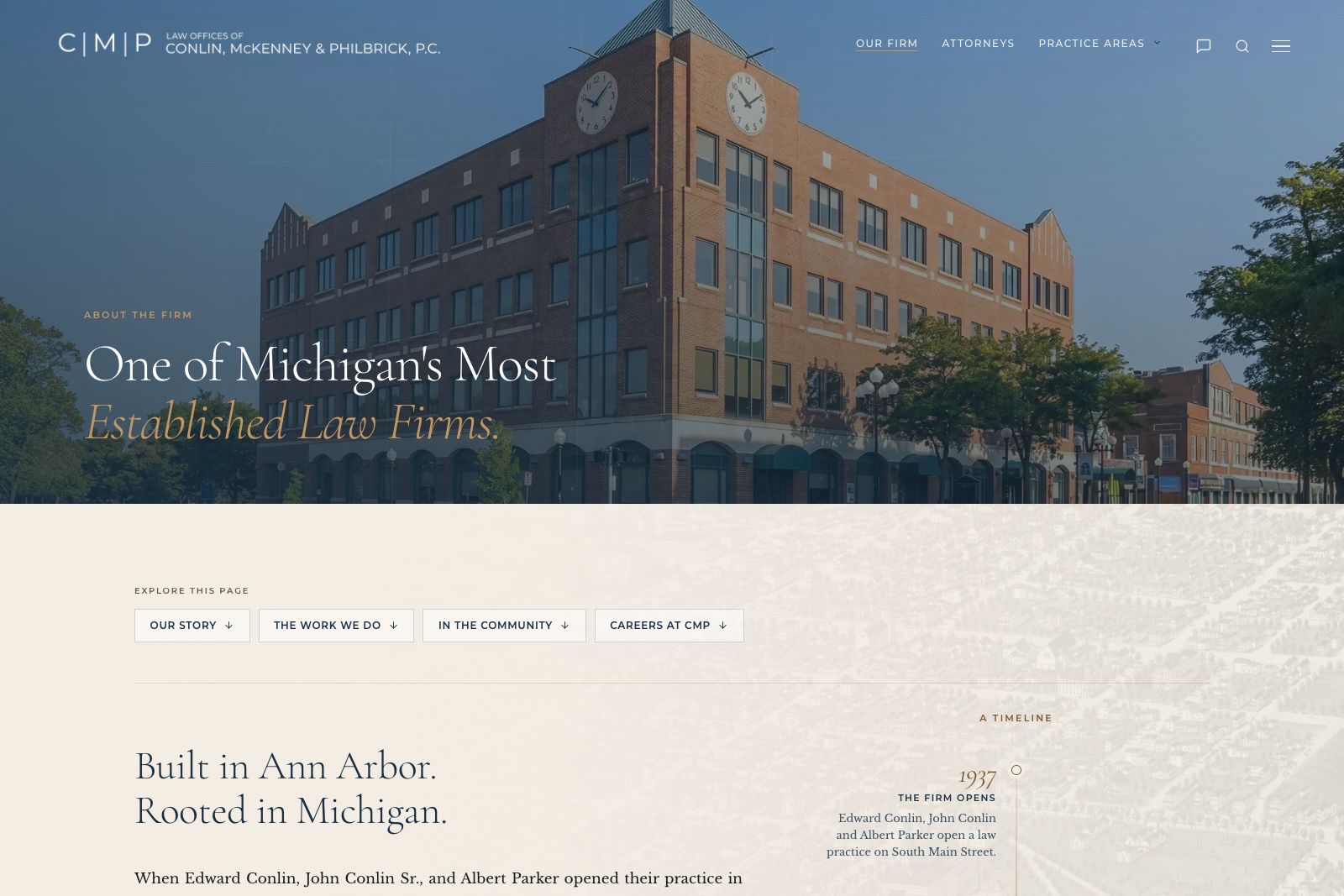
The design
How the website performs
Google Lighthouse checks a page’s loading behavior and selected technical qualities. These checks help identify obstacles that can slow visitors down or make a website harder to use.
- Performance
- Measures loading speed, visual stability, and main-thread work under simulated conditions. These affect how quickly visitors can see and use a page.
- Accessibility
- Checks issues such as labels, contrast, and page structure. Automated checks support, but do not replace, manual accessibility testing.
- Best practices
- Checks selected browser, security, and technical practices that contribute to a sound website.
- SEO
- Checks basic technical signals that help search engines access and understand a page. This score does not measure rankings or content quality.
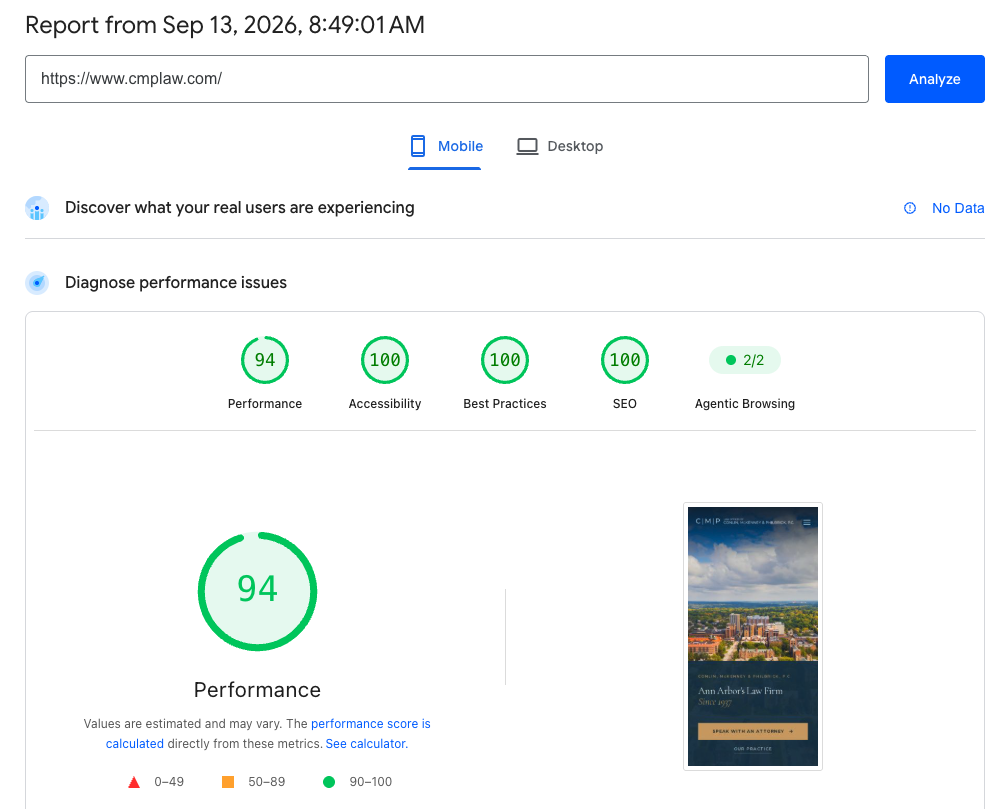
8:49 AM. Performance 94; Accessibility 100; Best Practices 100; SEO 100.
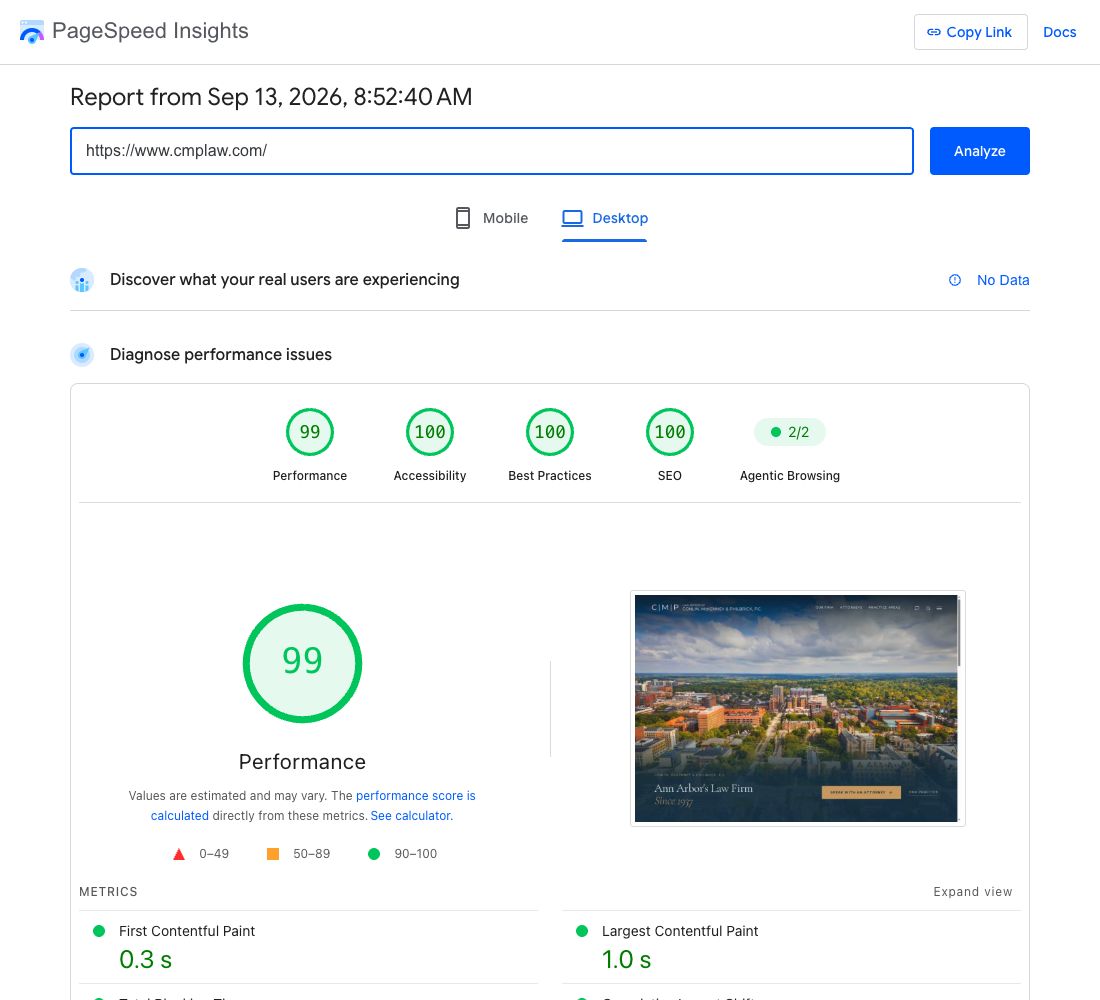
8:52 AM. Performance 99; Accessibility 100; Best Practices 100; SEO 100.